



|
|
|
|
| Spinning, Weaving & Rugmaking |      |
|
Cover
to Cover.. 252 Balmoral Drive, Southport
PR9 8QA, UK.. Tel. 44 (0)1704 231443..
E-mail covers@freeuk.com |
| Weaving is a very ancient art and goes back to the dawn of human life on earth. It is built into the human nervous system; it is an urge in our brains and our fingers.Mary M. Atwater, "The Weaver", July-Aug, 1941, vol. VI #3, p. 13 |
 |
 |
 |
 |
 |
 |
 |
 |
 |
 |
 |
 |
 |
 |
 |
 |
 |
 |
 |
 |
 |
 |
 |
 |
| Author
not given:ooooooooooooooooooooooooooooooooooooClick
on book image for larger version |
|||
Catalogue
of Cotton Spinning & Weaving Machinery, with Calculations, etc |
£16.00
|
||
Victoria
and Albert Museum - Notes on Carpet Knotting and Weaving |
£5.00 |
||
| Winding,
Warping and Weaving Machinery 1915 edition |
£25.00 |
||
Weaving
and Spinning - a creative craft for your leisure hours |
£8.00 |
||
| Notes
on Carpet Knotting and Weaving HMSO 4th imp 1961 8vo pb 42pp + 12 b/w plates, v sl wr, prev owner's name plate to fr cvr verso o/w VG++ 75 gms (Order reference 5855). |
£5.00 |
||
| Creative
Rug Making Marshall Cavendish 1st 1976 large 4to, bmps + wr to bds, sl wr + v min crsing to d/w o/w VG+/VG+ 720 gms (Order reference 3991). |
£5.00 |
||
|
|||
 |
Baines,
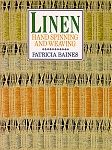
Patricia: Linen Handspinning and Weaving Batsford 1st 1989 4to, v v sl wrinkling + wr to top d/w edge o/w F++/F 895 gms (Order reference 14524). |
£50.00 |
|
| Benardout,
David: Care and Repair of Rugs and Carpets
Ebury Press 1st 1987 tall 8vo, glazed pictorial boards, minor water stain to inside d/w o/w F/VG++ 220 gms (Order reference 6526). |
£5.50 |
||
| Benson, Anna
& Warburton, Neil: Shire Album 154 - Looms
and Weaving Shire Publications 1st 1986 8vo stapled softback 32pp F 75 gms (Order reference 11879). |
£6.00 |
||
| Benson,
Anna & Warburton, Neil: Shire Album 154
- Looms and Weaving Shire Publications 1st 1986 8vo stapled booklet 32pp, sl wr to cvrs o/w VG++ 80 gms (Order reference 6142). |
£6.00 |
||
| Blake, Marguerite:
The Langdale Series - Revival of Spinning
and Weaving in Langdale (1883-1901) Marguerite Blake 1976 8vo stapled sftback 48pp, v v min crsing + wr to cvrs. Cvrs sl dulled o/w VG+ 40 gms (Order reference 11605). |
£5.00 |
||
| Boswell,
Thom: The Rug Hook Book - techniques, projects
and patterns for this easy traditional craft Sterling/Lark 1st 1992 4to F/F 685 gms (Order reference 11493). |
£10.00 |
||
| Bowen, Kernochan:
Four-Harness Weaving Watson-Guptill Publications 1st 1978 large 4to, wr, crsing + chips to d/w o/w VG++/VG+ 1075 gms (Order reference 6668). |
£12.50 |
||
| Bridgewater,
Alan & Gill: Popular Crafts - Guide to
Weaving Argus Books 1st 1986 4to pb 140pp, v v min wr to edges of cvrs o/w VG++ 360 gms (Order reference 7705). |
£5.50 |
||
| Campbell-Harding,
Valerie: Weaving with Ribbon David & Charles 1st 1987 4to, v min wr + bmps to bds, min crsing to d/w edges o/w VG+/VG+ 605 gms (Order reference 9707). |
£10.00
|
||
| Coss, Melinda
& Soudan, Sylvie: Magic Carpets -A Guide
to Creative Rug Making Collins 1st 1989 large 4to F/F 900 gms (Order reference 5213). |
£6.50 |
||
| Coss,
Melinda & Soudan, Sylvie: Making Rugs
- A Guide to Creative Rug making Diamond Books 1993 large 4to, glazed pict bds in similar d/w M/F 850 gms (Order reference 3916). |
£8.50 |
||
| Coss, Melinda
& Soudan, Sylvie: Magic Carpets - a guide
to creative rugmaking Collins 1st 1989 4to, wr, rbs, v v sl delamination to cnrs of d/w + 1 small tr o/w VG+/VG+ 890 gms (Order reference 12360). |
£5.50 |
||
| Croot, Ann:
Woven Carpets and Rugs Hamlyn 1st 1974 4to, v v min wr to bds, v v min wr to d/w o/w VG+/VG+ 465 gms (Order reference 6066). |
£5.00 |
||
| Cuyler,
Susanna: The High-Pile Rug Book Harper & Row 1st 1974 4to, v min crsing to d/w o/w M/F 690 gms (Order reference 3074). |
£8.50 | ||
| Davies,
Ann: Letts Contemporary Crafts - Rag Rugs
Letts rep 1995 4to, glazed pictorial boards F+ 570 gms (Order reference 6815). |
£6.00 |
||
| Ellacott,
S E: Spinning and Weaving Methuen 1st 1956 square format 4to, ex lib, no d/w, library binding VG+ 280 gms (Order reference 8979). |
£6.50 |
||
| Farr,
Christopher; Bourne, Matthew & Leslie, Fiona: Contemporary
Rugs Merrell 2002 large square format 4to F/F 1600 gms (Order reference 4973). |
£25.00 |
||
| Franses,
Jack: European and Oriental Rugs
John Gifford 1st 1970 8vo, d/w neatly covered in self-adh film, gift inscription by author to fep o/w VG++/VG++ 520 gms (Order reference 10572). |
£20.00 |
||
| Hurst,
George H: A Handbook of Carpet Dyeing and
Cleaning Charles Griffin 1895 8vo, gold titling to spine, blind stamped device to fr bd, v v min wr to bd edges o/w VG++ 355 gms (Order reference 6556). |
£25.00 |
||
 |
Jackson,
Constance & Plowman, Judith: The Woolcraft
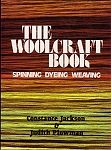
Book - Spinning Dyeing Weaving Collins 1st 1980 4to, v v min shelfwear to bottom edge of bds, v v sl wear to top edge of d/w o/w F/F 855 gms (Order reference 14373). |
£15.00 |
|
| Jarvis, P
R: A Practical Weaving Course Harlequin Press 1st 1947 8vo, bds v v sl dulled, d/w grubby with wr, chps + small areas mssg o/w VG+/VG 205 gms (Order reference 7706). |
£10.00 |
||
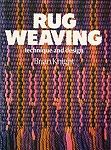 |
Knight,
Brian: Rug Weaving - Technique and Design
B T Batsford 1st 1980 F/F 606 gms (Order reference 2786). |
£9.50
|
|
| Leadbeater,
Eliza: Shire Album 43 - Spinning and Spinning
Wheels Shire Publications rep 1985 8vo, stapled softcvrs 32pp VG++ 75 gms (Order reference 9993). |
£2.50 |
||
| Lewes, Klares
& Hutton, Helen: Your Rugmaking Sylvan Press rep 1950 8vo, no d/w, v v min mrks to bds o/w VG+ 220 gms (Order reference 5044). |
£5.00 |
||
| Marein,
Shirley: Off the Loom - Creating with Fibre
Studio Vista rep 1974 4to, ex libris plate to fr pd o/w F/F 485 gms (Order reference 4908). |
£8.50
|
||
 |
Marks, R &
Robinson, A T C: Principles of Weaving The Textile Institute rep 1986 8vo pb 249pp, v v min bmps + wr to edges of cvrs o/w VG++ 460 gms (Order reference 13458). This book explains the principles. involved in the various mechanisms of a loom. It has been produced with the specific objective of complementinq the authors' previous work, 'Woven Cloth Construction'. It is difficult to keep a book on mechanisms up to date, and it is for this reason that the authors describe principles in preference to machine detail. This approach allows the reader to become aware of the fundamentals of various mechanisms found in a wide range of looms currently used in industry. Extensive use is made of line diagrams for ease of understanding and reproduction, particularly by students. An outline of the weaving process introduces the book, and this is followed by a study of the interrelationship between the movement and the timing of the primary motions of the loom. The main mechanism of looms are then dealt with in the following chapters, consideration being given to mechanical and mathematical theories, The principles of the newer methods of weft insertion receive a collective treatment, and this is followed by a chapter on cloth formation and warp and cloth control. The later chapters are devoted to stop motions, weft-patterning, weft replenishment, and loom drives. The book is intended to be of specific use to candidates studying for the examinations for Group 1 and Group 2 of the Associateship of the Textile Institute and also to those studying for TEC awards. |
£32.00 |
|
| McLaren,
Walter S Bright: Spinning Woollen and Worsted
Cassell & Co 2nd edn 1884 8vo, wr + bmps to bds + sp, prsentation plate dated 1885 to fr pd, fr bd sl shaken o/w VG 325 gms (Order reference 5856). |
£12.00
|
||
| Mercer, John:
The Spinner's Workshop - a social history
and practical guide Prism Press 1st 1978 8vo, v v min bmps + wr to bds, wr + chps to d/w edges o/w VG++/VG+ 315 gms (Order reference 3076). |
£6.50 |
||
| Mottram,
John: Practical Treatise on Building a Cop
D W Bardsley 2nd edn 1914 8vo, gold titling to fr bd, v v min wr to cnrs o/w VG+ 140 gms (Order reference 7647). |
£5.00 |
||
| Murray, Rosemary:
The Essential Handbook of Weaving Bell & Hyman 1st 1981 4to, ex lib, fep replaced VG++/VG++ 640 gms (Order reference 8365). |
£6.00 |
||
| Murray,
Rosemary: The Essential Handbook of Weaving
Bell & Hyman 1st 1981 4to, v min bmp to bds o/w F/F 630 gms (Order reference 13024). |
£6.50 |
||
| Nisbet,
H: Preliminary Operations of Weaving - 2 volume
set - Vol 1 Preparations of Grey or Plain Warps, Volume 2 Preparation of
Multi-coloured Striped Warps Emmott & Co. Vol 1 1914 Vol 2 1924 large 8vo, cvrs with minor wr + staining, name + address to 1/2 title page (vol 1) name to fr pastedown (vol 2) 1500 gms (2 vols) (Order reference 7600). |
£60.00 |
||
| Orman,
P: Pitman's Crafts for All series - Handloom
Weaving Sir Isaac Pitman 1934 8vo, bds with cloth spine, no d/w, v min wr to bds with v v sl marking o/w VG+ 245 gms (Order reference 8902). |
£4.50 |
||
| Peverill,
Sue: Make Your Own Rugs - a guide to design
and technique Hamlyn 1st 1989 lrge 4to, v v min bmps to bds, closed tr to d/w o/w VG++/VG++ 880 gms (Order reference 3072). |
£9.50 |
||
| Peverill,
Sue: Make Your Own Rugs - a guide to design
and technique Hamlyn 1st 1989 large 4to, VG++/VG++ 902 gms (Order reference 2775). |
£9.50 |
||
| Peverill,
Sue: Make Your Own Rugs - a guide to design
and technique Hamlyn 1st 1989 large 4to VG++/VG++ 925 gms (Order reference 5215). |
£9.50 |
||
| Phillipson,
Carol: Making Miniature Chinese Rugs &
Carpets Guild of Master Craftsmen 1st 2002 4to pb 100pp, v v min crsing to cvrs o/w VG++ 455 gms (Order reference 7963). |
£10.00 |
||
| Polkinhorne,
R K & M I R: Weaving and Other Pleasant
Occupations - as training for hand and eye in the schoolroom George Harrap 1st 1923 8vo, blind-stamped titling + device to fr bd, gold titling to sp, bmps + min wr to bds o/w VG+ 590 gms (Order reference 4327). |
£8.00 |
||
| Priestman,
Howard: Principles of Worsted Spinning Longmans, Green & Co 2nd edn, 1921. 8vo, no d/w, green bds, v v min wr to bds, prev owner's name + address to fep 770 gms. (Order Reference 5289) |
£15.00 |
||
| Reinisch,
Helmut: Gabbeh - the Georges D Bornet Collection
H Reinisch/Hali Publications 1st 1986 4to, small neat name + prev owner's printed name + address sticker to fep o/w F+/F+ 935 gms (Order reference 13575). |
£50.00 |
||
| Rhodes,
Mary: Small Woven Tapestries B T Batsford rep 1990 4to, glazed pict bds, v sl sunning to sp o/w F+ 685 gms (Order reference 4907). |
£12.50 |
||
| Seagroatt,
Margaret: Coptic Weaves - notes on the collection
of Coptic Textiles in the Merseyside County Museums Merseyside County Council/ Merseyside County Museums nd landscape format small 4to stapled sftbk, marks + sunning to cvrs o/w VG+ 90 gms (Order reference 14729). |
£5.50
|
||
| Sharp, Julie:
Making Fairies and Fantastical Creatures
- how to weave and carve in wool and chenille Guild of Master Craftsmen 1st 2000 4to pb 154pp, short crse to rear cvr o/w F 460 gms (Order reference 2738). |
£6.50 |
||
| Shillinglaw,
Phyl: Introducing Weaving B T Batsford 1st 1972 square format 4to, ex lib, v min bmps to bds, short tear to rear of d/w o/w VG+/VG+ 450 gms (Order reference 6431). |
£5.00 |
||
| Simpson, L
E & Weir, M: The Weaver's Craft Dryad Press 1st 1932 4to, tan cloth cvred bds with maroon titling to spine + fr bd. Min bmps + wr to bds, v v sl damage to head + tail of spine, v slight marking to fep o/w VG+ 575 gms (Order reference 14507). |
£40.00 |
||
| Simpson,
L E & weir, M: The Weaver's Craft Dryad 13th edn 1978 4to, no d/w F+ 710 gms (Order reference 4910). |
£8.00 |
||
| Taylor, John
T: Cotton Weaving and Designing Longmans, Green & Co. 1893 sm 8vo, green cloth covered bds which show wear to corners + tail of spine. Spotting to first few pages o/w VG+ 545 gms (Order reference 5603). |
£22.00 |
||
| Taylor,
John T: Cotton Weaving and Designing Longmans, Green and Co. 5th edn 1905 8vo, no d/w, v min wr to edges of bds, Sunday School prize plate to fr pd. VG++ 555 gms (Order reference 6902). |
£15.00 |
||
| Taylor, John
T: Cotton Weaving and Designing Longmans, Green & Co. new imp 1924 8vo, green bds with gold titling to spine, mottled marking to bds, name and address to fr pastedown + handwritten refewrence + same to fep verso, spine sl shaken o/w VG+ 585 gms (Order reference 8276). |
£12.00 |
||
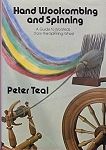 |
Teal,
Peter: Hand Woolcombing and Spinning Blandford 1st 1976 8vo, ex libris plate and previous owner's name and address sticker to fep verso o/w M/F 440 gms (Order reference 4913). Here is a book for hand-spinners who aspire to a high standard of professional excellence in their work. The book rediscovers many of the old methods and applies modern technological principles to the forgotten trade of wool combing. It explains how to make the tools, how to prepare, dye and blend the fibre, and finally how to spin a worsted yarn of controlled quality and specification. The serious student of spinning will find vital information on how much twist to give a yarn for a stated end use; how much oil to apply to raw, scoured fibre; how to assess the suitability of a spinning-wheel for a specific type of yarn, and how to produce a a yarn to internationally-accepted standards. Peter Teal has more than ten years of self-directed apprenticeship to the trade of spinning-wheel making and worsted spinning, years in which he has carried out exhaustive researches into methods of making the tools and into the reasons for differing designs, often marrying tradition and technology. The author has also applied his many years' experience as a photo-journalist in the commercial textile industry to provide simple, easy-to-follow instruction on the processes by which he has achieved the outstanding quality of his own spun yarns. The wool-combs, jigs, pad, diz, spinning-wheels, scales, etc., illustrated were all made by him in his workshop, powered, characteristically, by a 14-foot diameter water wheel. |
£75.00 |
|
| Tod, Osma
Gallinger: The Joy of Handweaving Dover 1st thus 1977 sm 4to pb 326pp, v min wr + v slight creasing to cvrs o/w VG+ 520 gms (Order reference 14880). This is the first paperback edition of a manual well known to weavers for its great thoroughness, clarity and value to beginning and professional weavers alike. The author has drawn upon many years' experience as a teacher and writer in preparing this practical text of basic weaving techniques and projects from the simplest to the extremely complex. |
£7.50
|
||
| Tompson,
Frances & Tony: Synthetic Dyeing for spinners,
weavers, knitters and embroiderers David & Charles 1987 4to, sl dulling to top edge + foredge of pages o/w VG++/VG++ 565 gms (Order reference 12677). |
£4.50 |
||
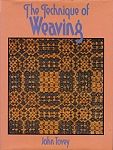 |
Tovey, John:
The Technique of Weaving B T Batsford 1st in pb 1983 4to pb 120pp, v v min bmps + wr to edges of cvrs o/w VG+ 355 gms (Order reference 9806). |
£7.00
|
|
| Tovey,
John: The Technique of Weaving B T Batsford new edition 1975 4to, ex lib, fep replaced, v v min bmps to bds o/w VG++/VG++ 600 gms (Order reference 8905). |
£5.00
|
||
| Waller,
Irene: The Craft of Weaving Stanley Paul 1st 1976 8vo pb 96pp VG++ 165 gms (Order reference 8378). |
£4.00
|
||
| Wearden, Jennifer:
Oriental Carpets and Their Structure - highlights
from the V & A Collection V & A Publications 1st 2003 large square 4to pb 144pp M 860 gms (Order reference 5131). |
£25.00 |
||
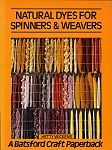 |
Wickens, Hetty:
Natural Dyes for Spinners & Weavers B T Batsford 1st 1983 4to pb 96pp, 2 small marks to rear cvr o/w VG++ 295 gms (Order reference 13081). |
£6.00 |
|
| Wilkinson,
William: Practical Weaving - a handbook of
the principles and practice of shedding (tappets and dobbies) Nelson 1915 4to, cloth cvred bds, wr + staining to bds, dmge to hd of spine o/w VG 555 gms (Order reference 7641). |
£10.00 |
||
| Wilson, Jean:
Weaving You Can Use Van Nostrand Reinhold 1st 1975 4to pb 136pp, v v min wr to edges of cvrs o/w VG++ 480 gms (Order reference 10432). |
£15.00 |
||
| Woodhouse,
Thomas: The Preparation & Weaving of Artificial
Silk or Rayon Sir Isaac Pitman 1st 1929 8vo, ex college lib, min wr to cnrs of bds + hd + tail of spine o/w VG+ 590 gms (Order reference 7645). |
£18.50 |
||
| TOP |
|
|
|
|