



|
|
|
|
|
Painting,
Drawing & Sculpture
|
     |
| Painting is self-discovery. Every good artist paints what he is. Jackson Pollock |
 |
 |
 |
 |
 |
 |
 |
 |
 |
 |
 |
 |
 |
 |
 |
 |
 |
 |
 |
 |
 |
 |
 |
 |
| Author
not given:ooooooooooooooooooooooooooooooooooooClick
on book image for larger version |
|||
Learn
to Paint and Draw |
£5.00
|
||
Learn
to Paint and Draw |
£5.00 |
||
Ambrus,
Victor: How to Draw the Human Figure |
£30.00
|
||
Angel,
Marie: Painting for Calligraphers |
£12.50 |
||
|
|
|||
| Ball,
Wilfred: Paint Watercolour - Capturing the
Moment David & Charles 1st 1994 4to, v v sl crsing to d/w o/w F+/VG++ 745 gms (Order reference 13938). |
£5.00 |
||
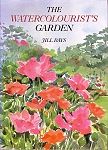 |
Bays, Jill:
The Watercolourist's Garden David & Charles rep 1993 large 4to M/F 780 gms (Order reference 4891). |
£10.50 |
|
| Blake,
Wendon Paintings by Claude Croney: Landscapes
in Watercolour Pitman 1st 1979 4to pb 80pp, v v min wr to edges of cvrs o/w VG++ 310 gms (Order reference 5721). |
£5.00 |
||
| Blake, Wendon
Paintings by George Cherepov: Landscapes in
Oil Pitman 1st 1979 4to pb 80pp, crsing + wr to cvrs o/w VG+ 315 gms (Order reference 5722). |
£5.00 |
||
| Bowyer,
Jason: Starting Drawing Magna Books rep 1992 4to, glazed pict bds F 375 gms (Order reference 3344). |
£5.50 |
||
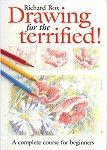 |
Box, Richard:
Drawing for the Terrified David & Charles 1st 1997 4to M/F 760 gms (Order reference 10631). A lifetime of experience teaching students to draw has taught Richard Box that the chief obstacle for many is the fear of their own lack of drawing ability. For over ten years his popular course Drawing For The Terrified has taught people from a wide range of backgrounds and abilities to overcome this fear and to draw with complete confidence. This book introduces Richard Box's remarkable teaching methods to a wider audience for the first time. The basic elements of drawing are all covered: materials, equipment, learning to see the subject accurately, drawing in monochrome, tonal values, the theory of colour and shading with coloured pencils - but what makes this book exceptional is the author's unique ability to teach. Richard Box believes that everyone has it in them to draw, although in adults this ability often lies concealed. Through a series of carefully designed, progressive exercises he systematically uncovers this innate talent, building the reader's confidence all the time. To begin with, he shows how to 'see' a subject 'perceptually' rather than 'conceptually' and then demonstrates how what is seen is successfully transferred to paper. Next he covers the use of shading to achieve different tonal values within a composition. Then, with the aid of a viewfinder and his 'perceptual' method of seeing, the author shows how to construct realistic likenesses of a wide range of subjects, building each composition stage by stage so that the progress is clearly visible. Enjoyment and understanding are the key elements to Richard's approach to teaching and from the start he projects a relaxed, positive frame of mind. Highly accessible and carefully illustrated, this book will open up a whole new world of creativity to all those who have longed to draw but never before dared to put pencil to paper. 
 |
£45.00 |
|
| Box,
Richard: Basic Drawing Techniques - learn
how to create beautiful pictures Search Press rep 2004 4to pb 48pp F 210 gms (Order reference 11271). |
£4.50 |
||
| Buckley, Sarah
(ed): Introduction to Painting with Watercolour
Eagle Editions 1998 glazed pictorial boards in a similar d/w F+/F 775 gms (Order reference 12596). |
£3.50 |
||
| Clemence,
Will: Manual of Postercraft
Blandford Press 1939 no d/w, 8vo, green cloth cvred bds, v min wr, sunning to spine, gift inscription dated 1944 to fep VG+ 380 gms (Order reference 12255). |
£5.00 |
||
| Crawshaw,
Alwyn: Crawshaw's Watercolour Studio Harper Collins rep 1994 4to, glazed pict bds in similar d/w F/VG++ 600 gms (Order reference 3343). |
£8.50 |
||
| Crawshaw,
Alwyn & June: Alwyn and June Crawshaw's
Outdoor Painting Course Harper Collins 1st 1997 4to, F/VG++ 820 gms (Order reference 14004). |
£8.00 |
||
| Doust,
L A: A Manual on Pastel Painting Frederick Warne 3rd imp 1942 v min dulling to bds, chps + wr to d/w o/w VG+/VG+ 245 gms (Order reference 3187). |
£8.00 |
||
| Doust, L A:
A Manual of Pastel Painting
Frederick Warne 1st 1933 v sm bmp to bds + sl dulled. Fep mssg, min crsing + wr to d/w + sm amt of loss o/w VG+/VG+ 245 gms (Order reference 3188). |
£8.50 |
||
| Doust,
L A (written + illustrated by): A Manual of
Oil Painting Frederick Warne 4th imp 1950 8vo, min spotting to prelims, marks + min wear to d/w o/w VG++/VG 310 gms (Order reference 5984). |
£5.00 |
||
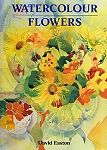 |
Easton,
David: Watercolour Flowers
B T Batsford 1st 1993 large 4to F+/F 800 gms (Order reference 9981). The transparent quality of water colour makes it the ideal medium for the delicate art of flower painting. By exploring many different approaches, rather than advocating a single method, David Easton encourages the artist to extend his or her range of expression to do full justice to the potential of waterbased colours. Using his own superb paintings as examples, he demonstrates that the traditional approach to watercolouroverlaying transparent colours from light to dark - is by no means the only option available. Opaque pigments, masking fluid, lifting the subject out of a washed background and the use of vibrant primary colours are all features of his work, and can be used to produce fresh and lively results. Drawing and composition are also examined in detail. Central chapters develop themes based on flower families, using a range of cultivated and wild flowers in natural and still-life contexts. A final section gives advice on framing and exhibiting finished work, with a resume of painting materials. The book is beautifully illustrated throughout, and will inspire beginners and more experienced watercolourists alike. 
 |
£10.00 |
|
| Fletcher-Watson,
James: Water Colour Painting - Landscapes
& Townscapes B T Batsford rep 1985 4to, small cancelled name & address to fep o/w VG++/VG++ 550 gms (Order reference 13156). |
£15.00 |
||
| Gair,
Angela: Drawing - a step-by-step guide to
drawing techniques Letts 1st 1994 large 4to, glazed pict bds in similar d/w M/F 590 gms (Order reference 4923). |
£5.00 |
||
| Gair, Angela:
Watercolour - a step-by-step guide to watercolour
techniques Tiger Books rep 1995 4to, glazed pictorial boards in similar d/w, v min crsing + sm tr to hd of sp of d/w o/w VG++/VG+ 600 gms (Order reference 5888). |
£5.00 |
||
| Gair,
Angela: Perspective for Artists Artists House rep 1992 lrge 4to, glazed pict bds VG++ 610 gms (Order reference 2777). |
£15.00 |
||
| Grant, John
& Tiner, Ron: The Encyclopedia of Fantasy
& Science Fiction Techniques Titan Books 1st 1996 square fmt 4to, v v min wr to bd edges, v v min wr to d/w edges o/w VG++/VG++ 820 gms (Order reference 13709). |
£6.00 |
||
| Harrison,
Hazel: Painting Solutions - Houses and Buildings
- from perspective to working on detail... all your questions asked
Studio Vista 1st 1992 4to, v v min wr to base of bds o/w F/VG++ 855 gms (Order reference 10513). |
£5.75 |
||
| Hauser, Priscilla:
The Book of Tole & Decorative Painting
Studio Vista 1st 1979 large 4to VG++/VG++ 900 gms (Order reference 6134). |
£7.50 |
||
| Hill,
Adrian: The Beginner's Book of Oil Painting
Blandford Press 10th imp 1974 8vo glazed pictorial boards VG++ 255 gms (Order reference 5977). |
£5.00 |
||
| Hill, Adrian:
Faces and Figures Blandford Press 1st 1962 8vo, wr + bmps to bds, creasing + wr to d/w o/w VG+/VG 290 gms (Order reference 5979). |
£9.00 |
||
| Hill,
Adrian: The Beginner's Book of Oil Painting
Blandford Press 4th imp 1961 8vo, v v min wr to bds, prev owner's pencil drgs of a figure to fep. Wr, chps + v sl water dmge to d/w o/w VG+/VG 265 gms (Order reference 5978). |
£4.00 |
||
| Hill, Adrian:
How to Paint Landscapes and Seascapes Blandford Press rep 1981 8vo, glazed pictorial boards F 240 gms (Order reference 7522). |
£5.00 |
||
| Hill,
Adrian: Drawing and Painting Architecture
in Landscape Blandford Press 1st 1966 8vo, v min crsing to d/w o/w F/VG++ 290 gms (Order reference 4043). |
£10.00 |
||
| Hill, Adrian:
Drawing and Painting Trees Blandford Press rep 1980 8vo, glazed pict bds, sunning to sp o/w VG++ 280 gms (Order reference 4042). |
£10.00 |
||
| Hill,
Adrian: The Beginner's Book of Watercolour
Painting Blandford Press 6th imp 1971 8vo, glazed pictorial boards, small name to fep F 240 gms (Order reference 12595). |
£1.50 |
||
| Howard,
Ken (ed): Art Class - a beginner's complete
guide to painting and drawing Parallel 1995 4to pb 240pp, v v min wr to cvrs o/w VG++ 690 gms (Order reference 4931). |
£5.50 |
||
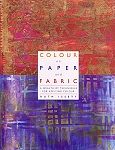 |
Issett,
Ruth: Colour on Paper and Fabric - a wealth
of techniques for applying colour Batsford 1st 1998 4to, v v sl wear to cnrs of bds o/w F/F 715 gms (Order reference 14131). |
£75.00 |
|
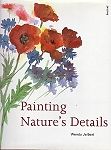 |
Jelbert,
Wendy: Painting Nature's Details B T Batsford 1st 1996 4to F+/F 800 gms (Order reference 13143). Wendy Jelbert explores the landscape, showing where inspiration can be found in fields, woodlands, ponds, rivers, gardens and beaches. She teaches how to select compositions from nature using a camera and sketchbook, and how to simplify the painting process. Using clear step-by-step demonstrations you will learn to paint the sun's rays, evening shadows, the intense colours of poppy and cornflower fields, as well as the beauty of plant-laden stone walls, old pots and rock pools. You will discover how to capture mood and atmosphere by glazing colours, texture using pen and wash, the massed effect of leaves, the fragility of white flowers and the crispness of snow. Practical, colourful and easy to use, Painting Nature's Details covers a wide range of techniques and enables artists to develop their own original paintings.
|
£20.00 |
|
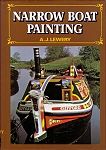 |
Lewery,
A J: Narrow Boat painting - a history and
description of the English narrow boat's traditional paintwork David & Charles 4th imp 1991 8vo, name + date to fr pastedown, v min crsing to d/w edges o/w F/VG++ 440 gms (Order reference 10739). |
£8.00 |
|
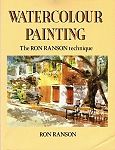 |
Ranson,
Ron: Watercolour Painting - the Ron Ranson
Technique Blandford Press rep 1985 4to, v v min bmps to bds, min crsing to d/w edges o/w VG++/VG+ 740 gms (Order reference 10525). |
£14.00 |
|
| Ranson, Ron:
Watercolour Landscapes from Photography Harper Collins 1st 1998 4to, v v sl shelfwear to btm edge of bds, neat name + address to fep, neat name to title page VG++/VG++ 770 gms (Order reference 14393). |
£12.50 |
||
| Ranson,
Ron: Ron Ranson's Painting School - Oils Brockhampton Press 1st 1993 4to, glazed pictorial boards in a similar d/w, waterstain to inside d/w o/w F/VG++ 695 gms (Order reference 8253). |
£49.00 |
||
| Ranson, Ron:
Watercolour Fast & Loose David & Charles 1st 1987 4to, v sl fading to top + btm edges of bds, sl wrinkling + sl wr to top of d/w edges o/w VG+/VG+ 680 gms (Order reference 14487). |
£7.50 |
||
|
Ranson,
Ron: Watercolour Painting - the Ron Ranson
Technique Blandford Press rep 1985 4to, v min bmps to bds + v feint water stain, waterstain to inside d/w + sl wr, chps + trs o/w VG++/VG+ 735 gms (Order reference 10721). |
£9.00 |
|
| Richmond,
Leonard: Fundamentals of Oil Painting Watson-Guptill 2nd prtg 1977 4to pb 144pp, v min dmge to edges of cvrs o/w VG+ 540 gms (Order reference 5706). |
£5.00 |
||
| Roddon,
Guy: Step-by-Step Pastel Painting Techniques
Burlington 1995 large 4to, glazed pict bds in similar d/w, v min crsing to d/w o/w M/VG++ 865 gms (Order reference 5219). |
£6.50 |
||
| Rodwell, Jenny:
Painting Portraits Eagle Editions 2004 4to pb 176pp VG++. 25 portrait painting projects illustrated step-by-step with advice on materials and techniques. 620 gms (Order reference 11351). |
£5.00 |
||
| Rodwell,
Jenny: The Complete Watercolour Artist
Pelham 1st 1987 large 4to, glazed pictorial boards in a similar d/w, v min crsing to d/w o/w F/VG++ 1500 gms (Order reference 8249). |
£20.00 |
||
| Schofield,
Heather: Flower Painting Techniques B T Batsford 1st 1978 4to, v v min browning to d/w edges o/w F/VG++ 660 gms (Order reference 5606). |
£6.50 |
||
| Scott, Angus:
Drawing in Pen and Ink Guild 1985 4to, d/w spine sl sunned o/w M/F 495 gms (Order reference 10588). |
£5.00 |
||
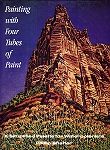 |
Shaffer,
Phillip: Painting with Four Tubes of Paint
- a simplified palette for watercolorists Watson-Guptill 1st 1990 4to, v min bmps to bds, v min crsing to d/w edges o/w VG++/VG++ 855 gms (Order reference 11455). When you walk into an art-supply store and are confronted with the seemingly infinite array of watercolor pigments for sale, do you find it almost too hard to choose the "right" ones? How many different reds do you really need, after all-four, five, six? The confusion and expense can be daunting. But Painting with four Tubes of Paint offers some refreshing and remarkably simple solutions. Following the lead of the old masters, Phillip Shaffer has chosen to paint with a limited palette. Here, in a series of 22 step-by-step demonstrations in which he depicts such beautiful natural settings as Wyoming's Grand Tetons, Hawaii's tropical shores, and Indiana's peaceful farms, Shaffer explores the full and versatile range of colors that can be created from combinations of just four basic hues: burnt sienna (a red), raw sienna (a yellow), cobalt blue, and olive green. He also makes judicious use of three auxiliary hues: new gamboge (a yellow), alizarin crimson (a red), and ultramarine blue. Limiting one's materials offers the painter certain advantages. The first is cost-the colors Shaffer recommends are relatively inexpensive and can thus be bought in quantity. Second, control with a limited palette, color mixtures are less likely to get out of hand. Third, color coordination-the artist can guarantee almost perfect color coordination because he will be using at least a little bit of each of the four basic hues in just about every composition. Fourth, familiarization-because there are fewer variables, the artist can become totally conversant with the practically infinite possibilities in his limited palette. To introduce artists to his distinctive method of painting, Shaffer offers informative sections on color mixing and theory, and variations on such basic watercolor techniques as flat and graded washes, drybrush, and painting wet-in-wet. Step-by-step demonstrations focus on ways to handle specific subjects and ways to best exploit particular watercolor techniques. Shaffer also shows how to correct paintings that go awry, how to take and work from photographs, and how to select mats and frames that will show off your paintings to their best advantage. Whether you are a beginning or a seasoned artist, you will discover that experimenting with a limited palette can stretch your imagination and improve your painting skills.
|
£7.00 |
|
| Simmons, C
R Graham: Art Techniques Made Clear John Gifford 1st 1973 8vo F/VG++ 310 gms (Order reference 11232). |
£5.25 |
||
| Slater,
Frank: New Art Library Second Series Vol XIX
- Practical Portrait Painting Seeley Service no date large 8vo, min wr to bds, name + address + handwritten reference no. to fep, small oil stain to btm r h cnr of first 24 pages, some pencil underlining o/w VG+/VG+ 820 gms (Order reference 9096). |
£12.00 |
||
| Smith, Ray
Campbell: Perspective - learn how to create
depth and realism Search Press rep 2004 4to pb 48pp F 215 gms (Order reference 11273). |
£3.00 |
||
| Smith,
Stan (consultant ed): How to Draw and Paint
- Oil, Watercolour, Acrylic, Pastel, Pencil, Pen & Ink, Tempera Ebury Press 1st 1981 large 4to, bmps + wr to bds + 1 tiny hole to fr bd, crsing + wr to d/w + sm pce mssg o/w VG/VG 1630 gms (Order reference 5601). |
£6.50 |
||
| Stanyer, Peter
& Rosenberg, Terry: The Art School - A
Foundation Course in Drawing from First Principles Arcturus 1996 16mo 80pp, glazed pictorial boards F/F 345 gms (Order reference 11242). |
£8.75 |
||
| Taylor,
Richard S: Drawing Traditional Buildings Robert Hale 1st 1987 square format 4to F/F 620 gms (Order reference 6438). |
£7.00 |
||
| Taylor, Richard
S: Drawing Traditional Buildings Robert Hale 1st pb edn 1991 square format 4to pb 175pp, crse to fr cvr o/w VG++ 480 gms (Order reference 5563). |
£7.00 |
||
| Taylor,
Richard S: Townscapes in Watercolour B T Batsford 1st 1992 landscape format 4to, v v min wr to base of bds, v v min crsing to d/w edges + 1 small tr o/w VG++/VG++ 615 gms (Order reference 10402). |
£12.50 |
||
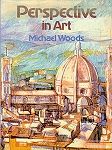 |
Woods,
Michael: Perspective in Art B T Batsford 1st 1984 4to, sunning to top + btm edges of bds, v v min wr + chps to d/w o/w VG++/VG++ 545 gms (Order reference 6931). One of the first problems an inexperienced artist will encounter is how to translate the third dimension to a flat piece of paper, how to convey the same impression of relative positions of lines and objects as the eye perceives. The brain stores the accepted information that all the sides of a cube are equal and at right angles to each other, and only a knowledge of perspective enables us to understand what happens to the appearance of objects when they are presented to the eye. To many, the question of perspective might seem a somewhat daunting prospect, but Michael Woods shows us here that it need not be and that, once the basic rules have been mastered, it is awareness and understanding, rather than a mathematical construction of objects in perspective, that is important. In the opening chapters he builds up a simple picture to illustrate the rules of perspective - a desert landscape with a cube house; the house has a sloping roof, four windows and a door; there is a person at the window; there are hills in the background. From there, and with the help of excellent line drawings and diagrams, the author moves on to the circle, the use of shadow to delineate structure, the introduction of people and animals, landscapes and buildings, water and boats. He then discusses various uses to which perspective can be put in the practical world, such as for the design of theatre sets, and its exploitation in many famous works of art and architecture: Good art is certainly not only that which obeys the laws of perspective, as many great abstract painters have proved, but a knowledge of how it works is one of the most important lessons an artist learns. It is up to him whether he chooses to use or constructively to misuse it.
|
£10.00 |
|
| TOP |
|
|
|
|