



|
|
|
|
| Architecture & Interior Design |
  |
|
Cover
to Cover.. 252 Balmoral Drive, Southport
PR9 8QA, UK.. Tel. 44 (0)1704 231443..
E-mail covers@freeuk.com
|
The
mother art is architecture. Without an architecture of our own we have
no soul of our own civilization. Frank
Lloyd Wright |
 |
 |
 |
 |
 |
 |
 |
 |
 |
 |
 |
 |
 |
 |
 |
 |
 |
 |
 |
 |
 |
 |
 |
 |
| Author
not given:ooooooooooooooooooooooooooooooooooooClick
on book image for larger version |
| Objekt
International No. 38 Jubilee Edition Hans Fonk Publications Vol 17, no. 2 Summer 2007 large 4to pb magazine VG++ 830 gms (Order reference 12484). |
£7.50 |
||
| The
Guild 7 - the architect's source of artists and artisans Kraus Sikes 1992 4to F/VG++ 1395 gms (Order reference 12950). |
£10.00 |
||
The
Town Hall Liverpool |
£4.00
|
||
| Site
Work - architecture in photography since early modernism
The Photographers' Gallery 1991 4to pb 92pp VG++. Published to coincide with exhibition. 440 gms (Order reference 14119). |
£65.00 |
||
| Preston
Mandir Guide Book Flame Tree Publications no date square format 4to pb 84pp F 260 gms (Order reference 11073). |
£3.00 |
||
| Illustrated
Catalogue of Macfarlane's Castings Volume 1 Walter Macfarlane & Co. 6th edn no date c 1895 8vo, green cloth cvred bds, bds worn at edges + cnrs o/w VG+ 465 gms (Order reference 7555). |
£100.00 |
||
| Dictionary
of Architecture Brockhampton 1995 16mo, glazed pict bds in similar d/w F/F 215 gms (Order reference 5043). |
£5.00 |
||
| Framing
- floors, walls, ceilings - the best of Fine Homebuilding
Taunton Press 1996 4to pb 144pp, v v min wr to edges of cvrs o/w F 555 gms (Order reference 11611). |
£9.50 |
||
| Speke
Hall National Trust 1st 1994 8vo stapled sftback 48pp VG++ 180 gms (Order reference 11113). |
£3.00 |
| Abbott,
Gail & Bolsover, Jane: Rowan Living -
Book 1 Rowan Yarns 1st 2002 4to pb 80pp F+ 375 gms (Order reference 14461). |
£4.50 | ||
Adams,
Joan & Thomas, Becky: Floating School
and Frozen Inkwell - the one-room schools of British Columbia |
7.50 |
||
Anderson,
William: Castles of Europe
|
25.00 |
||
| Anderson,
William: Castles of Europe |
15.00 |
||
Ashley,
Laura: Decorating with Textiles and Trimmings
|
5.00 |
||
| Avison,
Jo: Short cuts to designer style - Soft Furnishings Ward Lock rep 1998 4to pb 128pp VG++ 435 gms (Order reference 6656). |
5.00 |
||
| Beard,
Geoffrey: The Work of John Vanburgh B T Batsford 1st 1986 4to pb 176pp VG++ 475 gms (Order reference 8823). |
£18.00 |
||
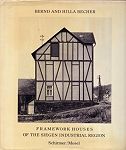 |
Becher,
Bernd & Hilla: Framework Houses of the
Siegen Industrial Region
|
£130.00 |
|
| Beedell,
Suzanne F'word by Henry Longhurst: Windmills
Bracken Books 1975? square format 4to, black bds with gold titling to spine VG++/VG++ 850 gms (Order reference 14711). |
£5.00 |
||
| Bowyer, Jack:
The Evolution of Church Buildings Granada Publishing 1st 1977 square format 4to, v min indents to fr of d/w, min sunning to d/w spine o/w F/VG++ 705 gms (Order reference 10504). |
£4.00 |
||
| Burke,
John: The English Inn B T Batsford 1st 1981 4to, v min crsing to d/w edges + v sl discolouration o/w VG++/VG+ 715 gms (Order reference 10435). |
£2.50 |
||
| Cacult,
Len: The Old Sessions House - A History of
the London Masonic Centre Central London Masonic Centre 1999 8vo, glazed pictorial boards VG++. Signed by author on title page. Prev owner's name (John Baillie) to fr pastedown. Folded A4 leaflet 'The Old Sessions House - a short history' laid in. 500 gms (Order reference 14228). |
£40.00 |
||
| Champness,
John: Lancashire's Architectural Heritage
- an anthology of fine buildings Lancashire County Council 1st 1989 large 4to pb 168pp, v min wr to edges of cvrs, gift inscr to inside of fr cvr o/w VG++ 685 gms (Order reference 8579). |
£6.50 |
||
| Clifford,
Jane (text and research): Laura Ashley Decorates
a London House Laura Ashley 1st 1985 4to, prev owner's bookplate to fep o/w F/F 500 gms (Order reference 6624). |
£5.50 |
||
| Cole,
Michael (series editor): Annual Register of
Book Values 1997 - the Arts & Architecture The Clique, 1997. 4to glazed pictorial boards, bmps + sl wr to bd edges o/w VG++ 440 gms. (Order Reference 13792) |
£2.00 |
||
| Conran, Terence:
The Essential House Book
Conran Octopus 1st 1994 large 4to, v min wr to d/w edges, small gift inscr to fep o/w F/VG++ 2kgs+ (Order reference 11098). |
£7.00 |
||
| Cooper,
Kathy & Hersey, Jan: The Complete Book
Floorcloths - designs & techniques for painting great looking canvas
rugs Lark Books 1997 4to F/F 720 gms (Order reference 12736). |
£8.00 |
||
| Copestick,
Joanna: Laura Ashley - Decorating Children's
Rooms - creating fun, practical and safe surroundings for your child Ebury Press 1st 1996 4to, glazed pictorial boards in a similar d/w, short tr + v min crsing to d/w o/w F+/VG++ 835 gms (Order reference 11312). |
£6.00 |
||
| Cotton,
Vere E: Liverpool Cathedral Official handbook
Liverpool Cathedral Committee/Littlebury Bros 4th edn 1924 8vo softback 121pp + 25 b/w plates (1 folding) + foldout floorplan. Min splitting to hd + tail of sp, min browning to floorplan o/w VG+ 265 gms (Order reference 7435). |
£5.50 |
||
| Cunnington,
Pamela: Change of Use - the conversion of
old buildings Alphabooks (A & C Black) 1st 1988 4to, ex library, v min wr to d/w o/w VG+/VG+ 925 gms (Order reference 9895). |
£5.50 |
||
| Delderfield,
Eric: Stories of Inns and their Signs
David & Charles 1st 1974 4to, v v sl crsing to fep, v sl dulling to inside of d/w, small date to fep o/w VG++/VG++ 555 gms (Order reference 14322). |
£4.50 |
||
| Ditchfield,
P H: The Village Church E P Publishing republished (1st thus) 1975 8vo, sm inscr to frontis verso o/w F/VG++ Republication of 1914 edition 560 gms (Order reference 3018). |
£12.00 |
||
| Duckett,
Dagny: Designs on Your Home
Diamond Books 1994 4to, v v min crsing + wr to d/w edges o/w VG++/VG+ 640 gms (Order reference 9867). |
£5.00 |
||
| Edwards,
I E S: The Pyramids of Egypt
Ebury Press/Michael Joseph 1st thus 1972 8vo, v v min bmps to bds, v min wr to d/w o/w VG++/VG+ 785 gms (Order reference 7848). |
£8.50 |
||
| Fletcher,
Ronald: In A Country Churchyard
B T Batsford 1st 1978 4to, v v min bmps + v sl dulling to bds, sl dulling to d/w, prev owner's name to title page o/w VG++/VG++ 660 gms (Order reference 13772). |
£2.00 |
||
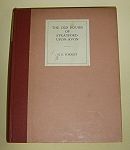 |
Forrest,
H E: The Old Houses of Stratford-upon-Avon
This is a limited numbered edition and SIGNED by the author. 4to, quarter-bound in reddish brown buckram and brown paper-covered boards. Black-printed cream title labels are laid on the spine and front board. It has 180 pages, a colour frontispiece tipped in (with tissue guard) and 7 further tipped-in plates by W.W. Quatremain, 23 black and white plates and 10 text illustrations. Lovely crisp clean colour illustrations. Numbered 231/250, signed by the author on the title page verso. Contains lists of bailiffs, mayors, etc. of Stratford. There is
slight wear to the bottom front corner of the boards plus slight dulling
and spotting to the prelims, slight marking and browning to title labels,
otherwise the book is in VG++ condition.870
gms |
£25.00 |
|
| Guild,
Tricia: White Hot - cool colours for modern
living Quadrille 1st 1999 large 4to, blind-stamped title to fr bd, sl cockling to pages, white titling to spine, two trs to d/w + min cockling o/w VG++/VG++ 1435 gms (Order reference 11569). |
£13.00 |
||
| Guild, Tricia:
In Town - contemporary design for urban living
Quadrille 1st 1996 large 4to F/VG++ 1535 gms (Order reference 10943). |
£18.00 |
||
| Guild,
Tricia: In Town - contemporary design for
urban living Quadrille 1st 1996 large 4to F/VG++ 1535 gms (Order reference 10943). |
£18.00 |
||
| Grundy, J
T: Construction Technology Volume 1 Edward Arnold rep 1991 8vo pb 200pp VG++ 290 gms (Order reference 11502). |
£4.50 |
||
| Grundy,
J T: Construction Technology Volume 2
Edward Arnold rep 1986 8vo pb 200pp VG++ 265 gms (Order reference 11503). |
£4.50 |
||
| Grundy, J
T: Construction Technology Volume 3 Edward Arnold rep 1989 8vo pb 202pp VG++ 300 gms (Order reference 11504). |
£4.50 |
||
| Halliday,
Stephen: Making the Metropolis - creators
of Victoria's London Breedon Books 1st 2003 4to pb 199pp, v v min bmps to cvrs o/w near F 515 gms (Order reference 13697). |
£8.50 |
||
| Hellman, Louis:
Archi-tetes - the id of the grid
Wiley-Academy 1st 2000 4to pb 126pp VG++ 485 gms (Order reference 11093). |
£5.00 |
||
| Hennessy,
R A S: Factories B T Batsford 1st 1969 4to, ex school lib, min crsing + wr to d/w o/w VG++/VG+ 500 gms (Order reference 7906). |
£12.50 |
||
| Hill, Adrian:
Drawing and Painting Architecture in Landscape Blandford Press 1st, 1966. 8vo, delamination to d/w, small name to fep o/w VG++/VG++ 295 gms. (Order Reference 11377) |
£4.00 |
||
| Hoag,
John D: Western Islamic Architecture - Over
100 illustrations including photographs, plans and drawings Readers Union 1964 d/w price-clipped, sm name to fep, wear to d/w edges o/w VG++/VG++ 535 gms (Order reference 6077). |
£7.00 |
||
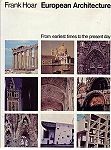 |
Hoar, Frank:
European Architecture - from earliest times
to the present day Evans Bros 1st 1967 4to, cloth cvred bds with silver titling to spine, min crsing + v slight wr to d/w o/w F/VG++ 1080 gms (Order reference 9165). The author, who lectures at London University, traces the development of architecture in Europe from the beginning of Greek civilisation to the present day. This is a highly comprehensive work which includes detailed sections on Byzantine, Roman and Gothic architecture. The effect of the Renaissance on Italian architecture and building in the rest of Europe is carefully examined and finally the author explains the latest architectural trends and suggests possible styles that may be used in the future. Of
Dr. Hoar's earlier book, An Introduction to English Architecture, 'The
Times' said, 'Dr. Hoar writes as effortlessly as he draws'. |
£12.00 |
|
| Home,
Beatrice: Chester, Manchester & Liverpool
Cathedrals, Abbeys and Famous Churches J M Dent 1925 small 8vo pb 192pp, sl bmps + wr to slightly grubby cvrs o/w VG+ 190 gms (Order reference 8626). |
£3.00 |
||
| Hood, Frederick:
The Chapel of the Most Excellent Order of
the British Empire OUP 1st 1967 4to, clth cvred bds, no d/w VG++ 530 gms (Order reference 853). |
£12.00 |
||
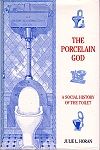 |
Horan,
Julie L: The Porcelain God - a social history
of the toilet Robson Books 1st 1996 8vo F+/VG++ 595 gms (Order reference 10255). |
£5.75 |
|
| Innes,
Miranda: Decorating with Traditional Fabrics
BCA 1994 large 4to, glazed pictorial boards in similar d/w, v v min crsing to top edge of d/w o/w VG++/VG++ 880 gms (Order reference 6013). |
£7.50 |
||
| Jackson,
Lesley: 20th Century Pattern Design - Textile
& Wallpaper Pioneers Mitchell Beazley rep 2004 large 4to, crse to front d/w foldover o/w F/VG++ 1430 gms (Order reference 14616). |
£30.00 |
||
| Kahane,
Jeff: Local materials - A Self-builder's Manual
Kahane 1st 1978 landscape format 4to pb 200pp, minor wr + sl sunning to cvrs o/w VG+ - scarce 465 gms (Order reference 6094). |
£14.00 |
||
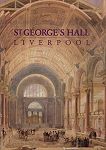 |
Knowles,
Loraine: St. George's Hall, Liverpool |
£5.00 |
|
| Lamborn,
E A Greening: The English Parish Church -
its architecture and antiquities Oxford 1929 16mo, no d/w, clth cvred bds with v v min wr. Bookplate of Sir George Whitehead, baronet to fr pastedown, typed index of plates attached to fly leaf o/w VG+ 300 gms (Order reference 9590). |
£6.00 |
||
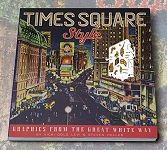 |
Levi, Vicky
Gold & Heller, Steven: Times Square Style
Princeton Architecture Press 1st 2004 square fmt 4to pb 144pp F+ 500 gms (Order reference 14422). From the blurb: ‘Before there was a Vegas and long before there was “reality television” there was Times Square. For a century it has been the blazing crossroads of the world; the sometimes magical, sometimes tawdry but always spectacular epicentre of American commercial culture. Times Square Style is a visual compendium of the energy and dazzle and glamour that made the Great White Way the most famous (and most notorious) place in America’s most famous (and notorious) city. From Ziegfeld’s Follies and George White’s Scandals to titanic signs with screaming type – Drink Pepsi! Smoke Camels! Good to the Last Drop! – to burlesques with dancing girls in short, short skirts, this book brings to colourful life a trove of arcane, lost and otherwise forgotten promotions, signs, flyers, programmes, posters, records, napkins, advertisements, billboards and other works of ephemera large and small. Times Square Style was published on the centennial anniversary of this defining American place and allows us to look back with nostalgic fondness on all of its irrational exhuberance.’ That
says it all, really. The book is packed with images illustrating the history,
life and vibrancy of New York’s Times Square – a place with
a style of its own. |
£15.00 |
|
| Luxton,
Charlie & Bevan, Sally: Restored to Glory
- a guide to renovating your priod home BBC 1st 2005 4to, glazed pictorial boards, v v min bmps to base of bds, sl crsing to edges of d/w o/w VG++/VG++ 1065 gms (Order reference 14155). |
£8.50 |
||
| Martin,
Herve: Guide de L'Architecture Moderne a Paris
1900 - 1990 Syros Alternatives 1987 large 8vo pb 286pp VG++. In French throughout 460 gms (Order reference 6927). |
£14.00 |
||
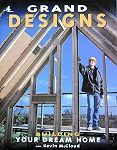 |
McCloud, Kevin:
Grand Designs - building your dream house
Channel 4 1st 1999 4to, bmps to btm corners of bds, small tr to btm front corner of d/w + v v min wrinkling to edges o/w VG++/VG++ 1020 gms (Order reference 12876). During the 1990s, architects and designers have increasingly encouraged us to change our houses to reflect the way we live and what better way to accommodate your demands than by designing and building your own home. Kevin McCloud's Grand Designs shows you how to transform these architectural fantasies into solid reality. Once you have made the decision to go ahead, how do you find a site and then choose the sort of house you want to build? To do this you should decide on a style of building that is suitable to the site and evaluate the different materials available. Can you buy an off-the-shelf home or will you need an architect? How can you design the house so it is eco-friendly? With these decisions made you are ready to start putting your plan into action. Are there any tasks you can undertake yourself or will you require professional help? Grand Designs guides you through the management of your project to the finished building. Finally, Kevin McCloud looks at the finishing touches to the interior and exterior that make the building into your dream home. First-hand accounts from the eight teams of people featured in the television series illustrate the benefits — and problems — of building your home. Varying in price, style and complexity, each of these new homes is built to complement the lifestyles of its inhabitants as well as the surrounding environment. They include an oak-framed barn in Oxfordshire, a kit house on the south coast, a converted chapel in Cornwall, a co-operative self-build project in Brighton and a house built partially of straw bales in Islington, London. Illustrated throughout with photographs and drawings, Grand Designs is an inspiration for anyone considering building their own home. |
£12.50 |
|
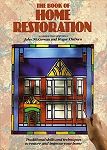 |
McGowan,
John & DuBern, Roger (consultant eds): The
Book of Home Restoration - traditional skills and techniques to restore
and improve your home Ebury Press 1st 1985 4to, min indents to bds + d/w o/w VG++/VG++ 1030 gms (Order reference 5515). The Book of Home Restoration is a practical DIY book - but with an important difference. Instead of describing yet more short cuts, more time-saving gadgets and more short-term solutions to problems, this book shows you step-by-step how to do jobs around the house and garden properly, as they used to be done - in time-honoured fashion and with materials that will ensure high quality, long-lasting results. All the techniques described are those needed to maintain older houses, gardens and possessions. Mending leaded-light, stained-glass windows; veneering; re-upholstery; marbling and rag-rolling; repairing wooden furniture; hanging satin wallpapers; repairing thatched roofs; making tromps I'oeiI panels; dry stone walling; hedging; topiary; all this and much more is described and explained, using the methods and skills of our grandparents, passed down through the centuries and now known to fewer and fewer tradesmen. Specialist tools are carefully illustrated and described, and original recipes are provided so that you can make your own polishes, stains, glues, putties and plaster. The Book of Home Restoration is not just for those who hanker after the higher standard of workmanship in the past - its practical, down-to-earth approach provides all the knowledge and expertise you need to achieve those standards yourself. Concentrating on tasks and jobs around the home and garden that remain relevant to the modern householder. The Book of Home Restoration will enable you to use the old skills before they are forgotten, and to enjoy a genuine sense of pride and craftsmanship in your work. |
£6.50 |
|
| McIntyre,
Anthony: The Shell Book of British Buildings
David & Charles 1st 1984 v min bmp to fr bd o/w VG++/VG+ 828 gms (Order reference 1594). |
£6.00 |
||
| Miles,
Malcolm: The Uses of Decoration - essays in
the architectural everyday John Wiley & Sons 2000 4to pb 256pp, short crease to fr cvr o/w F 575 gms (Order reference 13655). |
£2.50 |
||
| Miles, Malcolm:
The Uses of Decoration - essays in the architectural
everyday John Wiley 1st 2000 4to pb 256pp, v v min wr to edges of cvrs o/w F 580 gms (Order reference 10804). |
£2.50 |
||
| Morgan,
William: The A-Z of Charles II's London 1682
- London etc. Actually Survey'd London Topographical Society Publication No. 174 1st 2013 4to, tan bds with gold titling to spine, v min creasing to top front edge of d/w o/w F/VG++ 1090 gms (Order reference 14888). |
£25.00 |
||
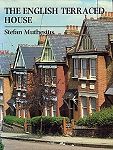 |
Muthesius,
Stefan: The English Terraced House BCA 1983 4to, min bmps to bds o/w VG++/VG++ 1075 gms (Order reference 10350). The most common type of house in Britain—the terraced house—has in recent years risen greatly in the estimation of the public and of experts all over the world. Stefan Muthesius has written the first book to chart the development of the terraced house from the later Georgian period through Regency splendour to Victorian and Edwardian times, when a kind of medium-sized house was developed which in many ways remains the most popular suburban house type today. The ordinary house, built rapidly, economically and to standardized designs, is the focus of this book. The method, management and control of English speculative building are first discussed, followed by the planning, servicing, structure, facade and detailed decoration of the house. Muthesius deals with some of the more complex issues in the history of housing and building: the variety of working-class housing in the north; the way that changes in domestic life brought changes of plan: the influence of new styles and technological developments on the use of common building materials; distinctions between sizes and types of house in the context of the social stratification of Victorian society: and the eventual demise of the terrace as the most fashionable place to live by the end of the nineteenth century. Cities and towns all over England and Wales are discussed and illustrated in order to cover the rich regional varieties of the terrace. This is a book that will interest not only historians, architects, and planners, but anyone who lives in or admires a terraced house. 
 |
£50.00 |
|
| Nicholls,
John Richard Lee: Kendal Parish Church
British Publishing Co. 6th edn no date (1960?) 8vo stapled sftbk 32pp, v v sl crsing + v v sl wr to cvrs o/w VG++ 40 gms (Order reference 12237). |
£4.50 |
||
| O'Shaughnessy,
Frances: The Story of Burton Dassett Church
no publisher given no date 8vo stapled softcvrs 16pp VG++ 40 gms (Order reference 10314). |
£2.00 |
||
| Page-Phillips,
John: Macklin's Monumental Brasses George Allen & Unwin 1st 1969 square format 4to pb 188pp, v slight wr to edges of cvrs, small area of abrasion to inside fr cvr o/w VG+ Including a bibliography and a list of figure brasses remaining in churches in the United Kingdom. 545 gms (Order reference 7569). |
£5.00 |
||
| Parish, Alec
& Goddard, Ivor: London's Pride - some
buildings of special interest Ward, Lock & Co. 1st 1951 8vo, glazed pictorial boards in a similar wrapper, wear + bmps to edges of bds, wr, chps, crsing + small areas mssg from price-clipped d/w, gift inscr to fep o/w VG/VG 270 gms (Order reference 13732). |
£5.00 |
||
| Platt,
Colin: The Parish Churches of Medieval England
Chancellor Press 1995 4to, glazed pictorial boards F/VG++ 695 gms (Order reference 14147). |
£12.00 |
||
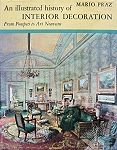 |
Praz, Mario:
An Illustrated History of Interior Decoration
- from Pompeii to Art Nouveau Thames & Hudson 1st 1964 v min wr to bds, v min wr to d/w o/w VG+/VG+ over 2kgs (Order reference 2255). With a masterly blend of erudition, insight and wit Mario Praz, noted scholar, art critic and author, has written a lively and informative history of interior decoration from Roman times onwards. Not only is this a book of reference and up-to-date knowledge on the styles of furnishing and decorating, it is also a sophisticated work about the oddities and domestic environment of the human race, an historical-sociological study of man in relation to his furnishings. The author believes that a man's home is a physical extension of himself, a retreat and an indication of his personality and life. Unlike other publications on furniture and decoration this scholarly work allows us to penetrate intimately the homes of the past. Its authority is based not only on the vast knowledge of the author, but also upon the particular kind of material chosen for illustration. Praz has not used period rooms photographed as they exist today, altered and emptied of the life which once filled them, but he has illustrated his book with 401 paintings, drawings and prints, by artists from Pompeii to Art Nouveau who have faithfully recorded the studies and salons, boudoirs and banqueting halls, kitchens and baths of their contemporaries. Some of these illustrations of interiors are famous works of art, such as the paintings of Vermeer and Hogarth, or the engravings of Durer. Many, however, are lesser known, charming and precise watercolours or oil paintings of interiors, which families commissioned from artists in order to record: their homes and the life within these homes. No other book has ever recreated so clearly and warmly the homes of earlier epochs with such a wealth of authentic material, and no other book will prove such a valuable reference work for all who are interested in period styles of furnishing and the art of decoration generally. |
£125.00 |
|
| Pringle,
Marian J: The Theatres of Stratford-upon-Avon
1875 - 1992 - an architectural history Stratford-upon-Avon Society 1994 8vo pb 107pp F 275 gms (Order reference 9803). |
£8.50 |
||
| Reid,
Richard: The Shell Book of Cottages
Michael Joseph 1st 1977 8vo, pictorial bds in a similar d/w, d/w price-clipped F/VG++ 595 gms (Order reference 9480). |
£8.00 |
||
| Reynolds,
John: Windmills & Watermills
Hugh Evelyn rep 1974 square format 4to, blue bds with gold titling to sp, small cancelled bookplate to fep, slight crsing + trs to d/w o/w VG++/G++ 950 gms (Order reference 14512). |
£10.00 |
||
| Roberts,
Eileen: The Hill of the Martyr - an architectural
history of St Albans Abbey The Book Castle 1st in pb 1994 sm 4to 293pp, v v min wr o/w VG++ 730 gms (Order reference 5868). |
£10.00 |
||
| Roche, Tony
& Monahan, Patricia: Decorating with Stencils
- innovative designs step-by-step instructions & templates Weidenfeld & Nicolson 1st 1995 large 4to VG++/VG++ 1035 gms (Order reference 13363). |
£6.00 |
||
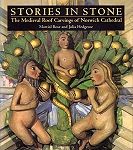 |
Rose, Martial
& Hedgecoe, Julia: Stories in Stone -
the medieval roof carvings of Norwich Cathedral Herbert Press 1st 1997 square format 4to paperback 144pp VG++ 490 mgms (Order reference 14859). The magnificent roof bosses of Norwich Cathedral are one of the great hidden glories of medieval art. There are more than one thousand of these delightfully carved and painted keystones in the high stone vaulting, dating from 1300 to 1515 and measuring between eight and twenty-four inches wide. The vast majority are figure carvings uniquely linked together in storytelling patterns, reflecting a variety of pagan, Christian, and folk subjects. In quantity and quality, Norwich's bosses are among the most impressive in Europe, while their narrative arrangement makes them unparalleled in the medieval world. Situated some eighty feet up from the floor of the cathedral, these ornaments are too distant to have been fully appreciated by worshippers over the centuries; by the same token, their inaccessibility has protected them from vandalism. Until recently their character and detail have been discernible to only a dedicated few through telescopes and binoculars, but modern technology has now made it possible to photograph the images and make them visible to the general public. This book reproduces the most striking and interesting examples, selected from the hundreds of exquisite colour photographs taken by the distinguished photographer Julia Hedgecoe, under the auspices of the cathedral. They are introduced and fully described in a lively text by one of Norwich's foremost medieval historians, Martial Rose. |
£5.00 |
|
| Rostron,
Jack & Fordham, Murray A: Refurbishing
Offices for People with Disabilities Arena 1st 1996 F/F 320 gms (Order reference 3173). |
£15.00 |
||
| Roulstone,
Michael Ills Alan Roulstone: Taverns in Town
Balfour 1st 1973 wr to d/w edges o/w VG++/VG 390 gms (Order reference 1590). |
£4.50 |
||
| Ryder,
Peter F: Medieval Buildings of Yorkshire
Moorland Publishing 1st 1982 4to, blue bds with gold titling to spine, minor dulling to d/w + minor tanning to pages o/w VG++/VG++ 675 gms (Order reference 14712). |
£8.00 |
||
| Smith,
Edwin; Cook, Olive & Hutton, Graham: English
Parish Churches BCA 1977 8vo, sl sunning + wr to edges of bds, v v sl wr to edges of d/w o/w VG+/VG+ 615 gms (Order reference 8056). |
£6.00 |
||
| Smith, R J
L (compiled + edited by): A Guide to Cathedrals
and Greater Churches R J L Smith 1st 1988 8vo pb 360pp, v minor wr to edges of cvrs, sl sunning to spine o/w VG+ 665 gms (Order reference 14876). 360 pages with glossary, facilities and charts and the book is illustrated throughout with black and white drawings. Described are 55 churches, minsters, abbeys and cathedrals, each illustrated by a full-page line drawing. Each building has background historical information, a brief description of the exterior and interior, along with a list of services for weekdays & Sundays with times. There is a location map at the front of the book, other illustrations include the dioceses of England, a plan of a cathedral, & period styles in English architecture. Also included is a list of important dates in the development of the church in Britain from 29 AD to the mid-twentieth century. |
£4.00 |
||
| Sommer, Robin
Langley: American Architecture - colonial
styles to the present day Saraband 2nd edn 1998 folio, v v min wr to bds, small name to fep, sl wear to d/w edges + closed tear o/w VG++/VG++ 1250 gms (Order reference 6636). |
£7.00 |
||
 |
Statham,
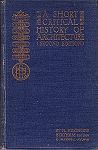
H Heathcote: A Short Critical History of Architecture
Batsford 2nd edn 1927 no d/w, embossed gold titling to cvr + sp, sp sunned, sl wr o/w VG 1205 gms (Order reference 1159). |
£30.00 |
|
| Vale,
Brenda & Robert: The Autonomous House
- designing and planning for self-sufficiency Thames & Hudson rep 1977 8vo pb 224pp F 390 gms (Order reference 6312). |
£5.00 |
||
| van Schaik,
Leon: Architectural Monographs No. 50 - Tom
Kovac Academy Editions 1st 1998 square format 4to pb 111pp F 740 gms (Order reference 10801). |
£8.00 |
||
| Vince,
John: Shire Album 3 Canals & Canal Architecture Shire Publications 1st, 1973. 8vo stapled booklet 32pp, v v min marking to cvrs o/w VG++ 80 gms. (Order Refrerence 7794) |
£8.00 |
||
| Vogt, A M:
The Herbert History of Art and Architecture
- the Nineteenth Century Herbert Press, 1989. 8vo pb 189pp, min bmps + wr to edges of cvrs o/w VG++ 445 gms. (Order reference 9425). |
£4.00 |
||
| Ward,
Rev A John: Chapel into Church - how Denton
Chapel became St. Lawrence's Church no publisher stated 1973 4to, wr, chps + short trs to dulled d/w o/w VG++/VG. Signed by author on title page - dated 1974. 660 gms (Order reference 14030). |
£14.50 |
||
| Waterhouse,
P Leslie: The Story of Architecture George Newnes 1902 small 8vo, no d/w, blue bds with black decoration, gold titling to spine, sl dulling to bds + sl wr o/w VG+ 215 gms (Order reference 13687). |
£6.00 |
||
| Watkins,
Charmian: Decorating with Fabric Liberty Style
Guild 1st thus 1987 4to, v v sl sunning to top + btm edges of bds o/w VG++/VG++ 920 gms (Order reference 9232). |
£5.00 |
||
| Wedd, Kit
(intro by): The Victorian Bathroom Studio Editions 1st 1996 large 4to, few indented lines to d/w, a couple of which are transferred to fr bd o/w VG++/VG++ 1075 (Order reference 3917). |
£14.00 |
||
| Wheeler,
Mortimer: Roman Art & Architecture Thames & Hudson 1st, 1964. 8vo pb, min wr to edges, sl delamination on sp o/w VG+ 484 gms. (Order reference 2743). |
£
3.50 |
||
| White, Andrew:
The Buildings of Georgian Lancaster Centre for North-West Regional Studies - University of Lancaster 1st 1992 4to pb 56pp, min crsing + wr to cvrs, light pencil underlining throughout o/w VG+ 153 gms (Order reference 8023). |
£8.50 |
||
| Willis,
Ronald: Yorkshire's Historic Buildings Robert Hale 1st 1975 8vo, v v min bmp to edge of fr bd, v v tiny indents to fep o/w F/VG++ 520 gms (Order reference 12345). |
£5.00 |
||
| Wood, Margaret
Preface by Sir Mortimer Wheeler: The English
Mediaeval House Studio Editions 1994 4to, slight sunning to d/w o/w VG++/VG++ 1440 gms (Order reference 14142). |
£12.00 |
||
| Wright,
Geoffrey N: Discovering Abbeys and Priories
Shire 2nd edn 1979 small 8vo, min mrking to cvrs o/w VG++ 70 gms (Order reference 9458). |
£2.50 |
||
| Zevi, Bruno
(consultant): Bioclamatic Architecture De Luca Edizioni d'Arte 1st 1989 large 4to pb 88pp, v min bmps + crsing to cvrs o/w VG+ 770 gms (Order reference 6017). |
£12.00 |
||
| TOP |
|
|
|
|





